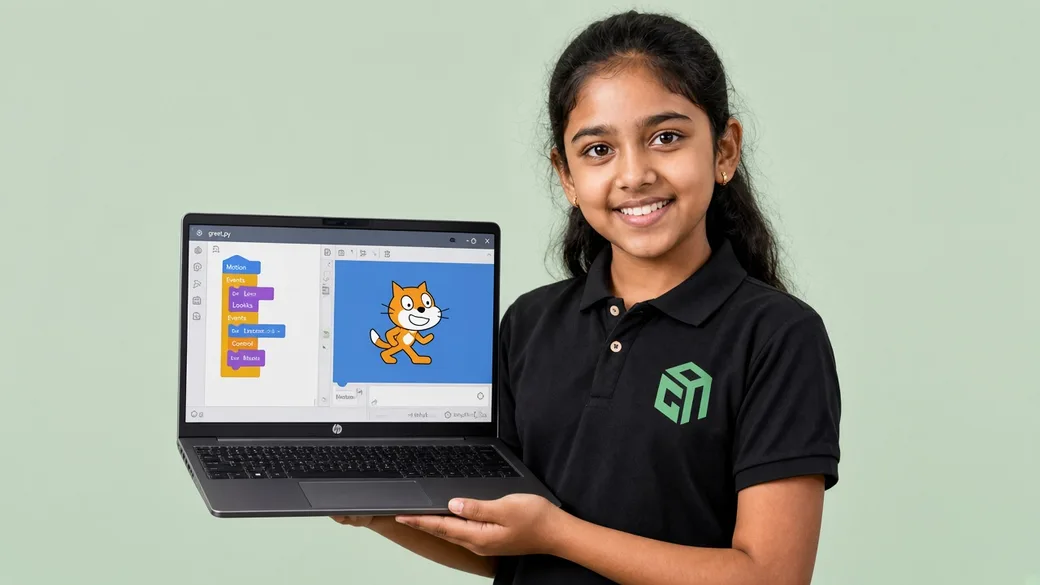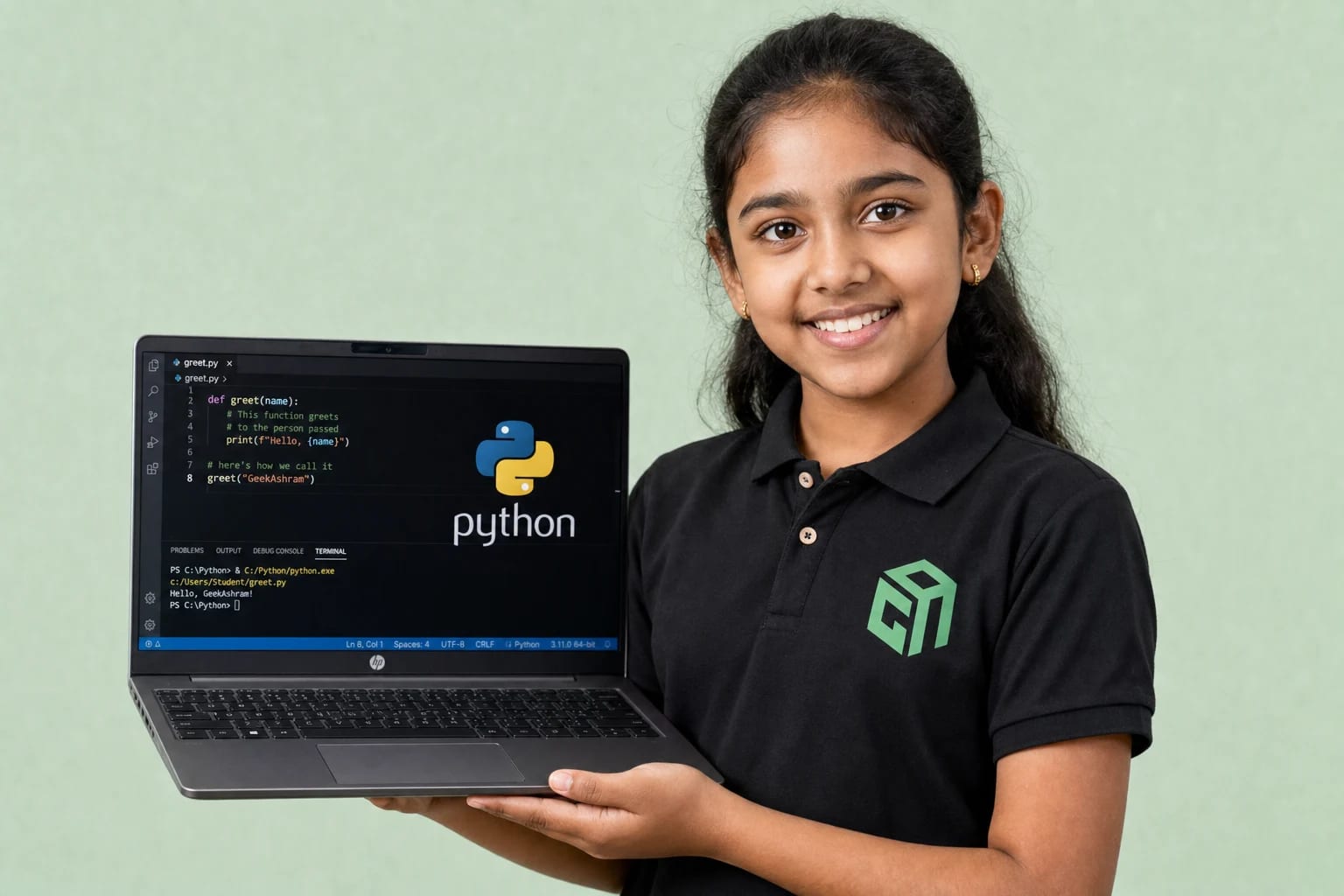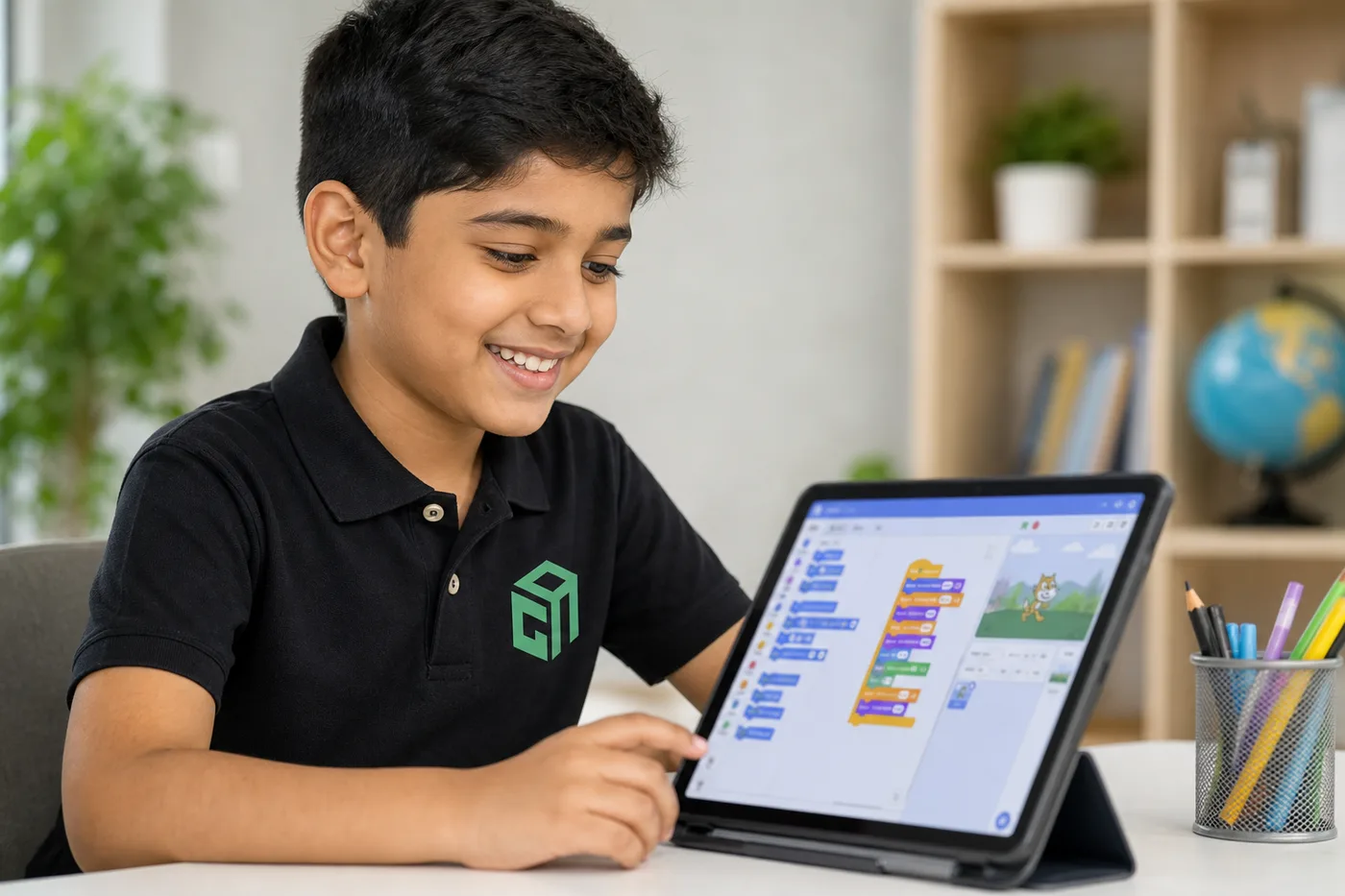
What age should kids start learning to code? Most children can begin around ages 7–8 with visual, project-based lessons. Typed coding like Python usually fits better from Class 5–6, once typing and step-by-step thinking feel comfortable.
There is no single perfect birthday. Readiness shows up as curiosity, the ability to follow short instructions, and joy when something they built actually works.
Age-by-Age Coding Guide for Parents
| Grade / age | Start here | Course syllabus |
|---|---|---|
| Grade 3–5 (about 8–10) | Scratch games and stories | Scratch syllabus |
| Grade 5–8 | Python with AI or web pages | Python · Web |
| Grade 8–12 | AI/LLMs, robotics (30 sessions, beginner Python), portfolios | Hands-on AI · Robotics |
Signs Your Child Is Ready
- They ask how apps, games, or robots work
- They can follow a 3–5 step instruction without shutting down
- They enjoy puzzles, building, drawing, or tinkering
- They can handle small mistakes without quitting immediately
What Not to Do
- Do not force advanced syntax because it sounds impressive
- Do not replace all playtime with coding videos
- Do not skip projects — theory alone kills motivation
- Do not wait until “they are older” if curiosity is high now
How GeekashramJr Matches Age to Track
The first 60-minute live session is priced in your local currency, adjusted on enrolment, and you get a written learning plan afterwards. Mentors check grade, attention span, and interest, then suggest visual foundations, Python with AI, web development, AI in Everyday Life, or robotics — so the first class feels like creation, not pressure. US families book that same session in USD at /demo and can compare US plans. See also coding curriculum by grade.