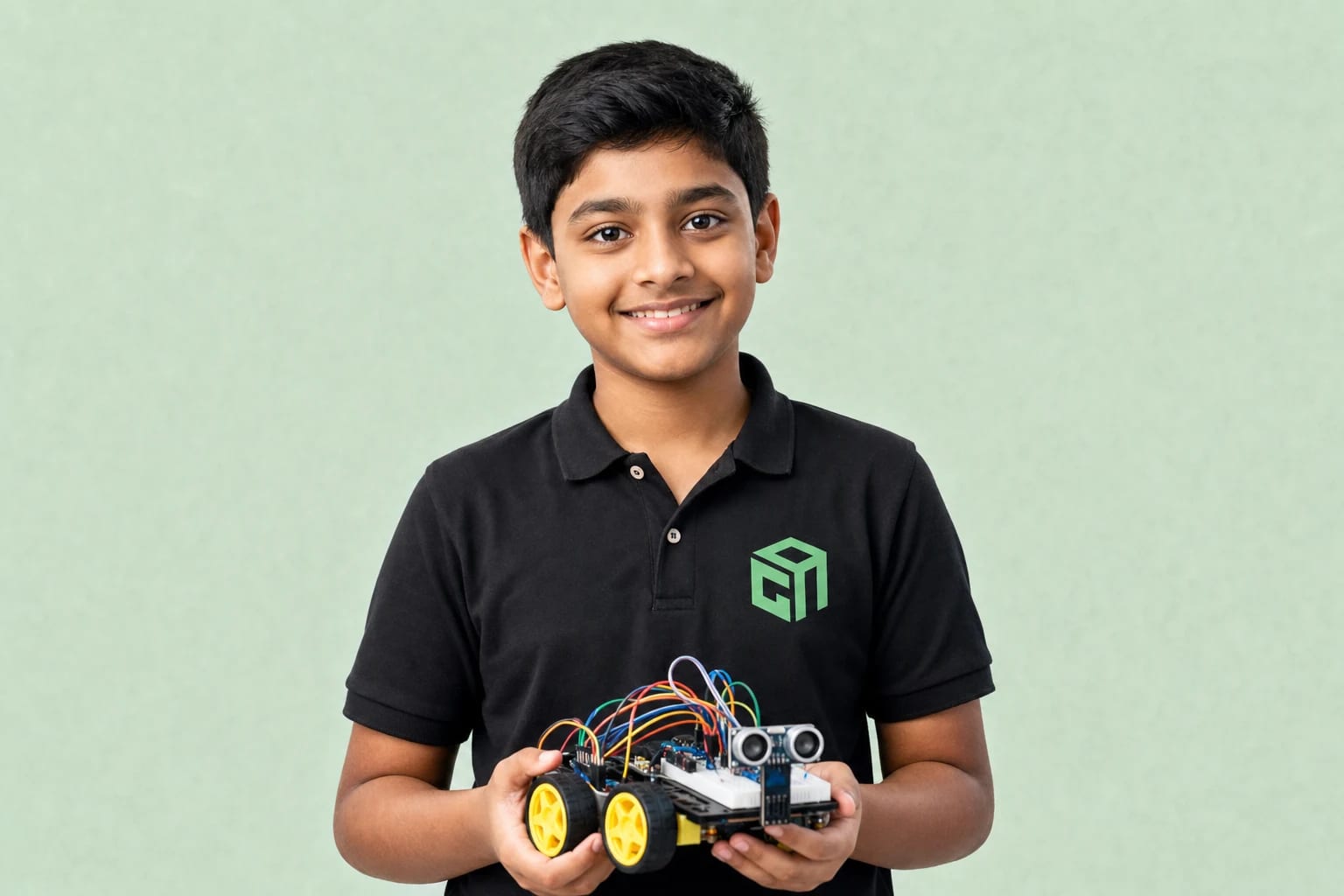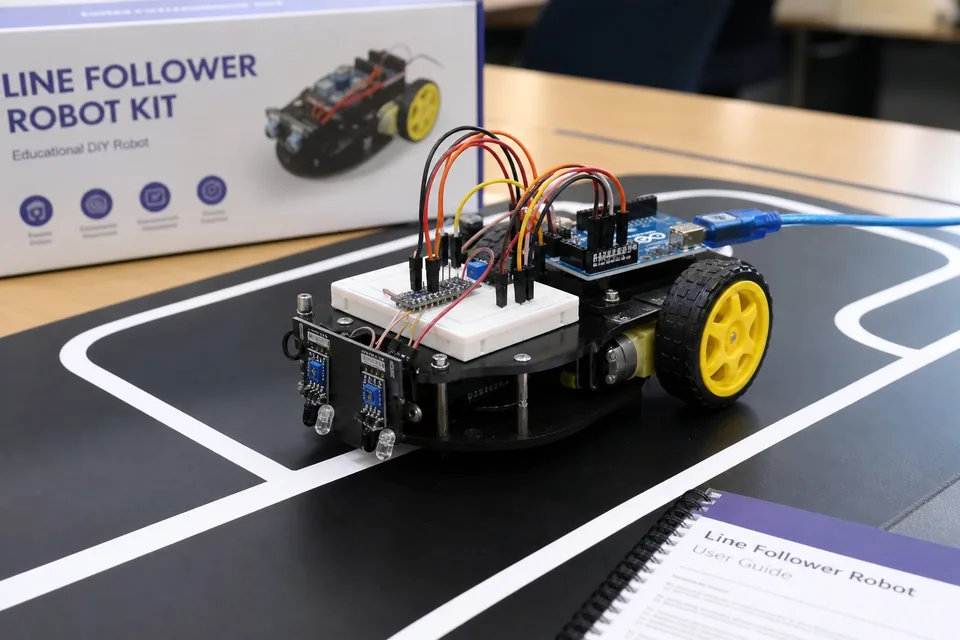
A line-follower robot works by watching a line with IR sensors and steering motors to stay on that path. If the left sensor loses the line, the robot corrects; if the right sensor loses it, it corrects the other way. That simple loop is real robotics logic.
Main Parts
- Chassis and wheels
- Motors and motor driver
- IR line sensors
- Controller board (often Arduino-compatible)
- Battery supply approved for the kit
Logic Kids Can Say Out Loud
- If both sensors see the line → go forward
- If left loses the line → turn right a little
- If right loses the line → turn left a little
- If both lose the line → stop or search
Why This Project Is Perfect for School Students
It connects sensors, code, and movement in one demo parents can see. Debugging is visible: the robot either follows or it does not — so kids get fast feedback.
GeekashramJr robotics includes line-follower builds after electronics basics. Book a local-currency 60-minute session (adjusted on enrolment) to see if your child is ready.