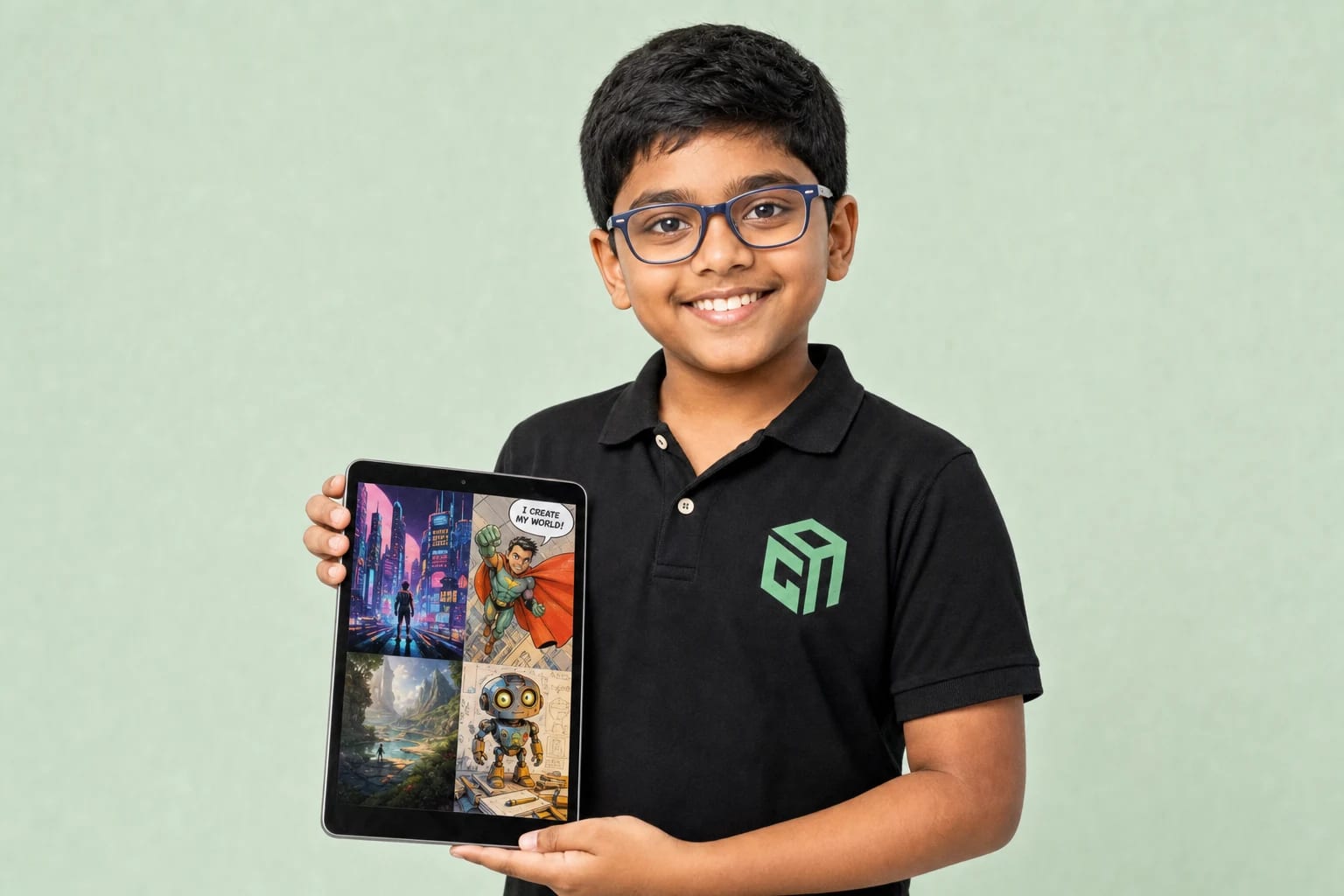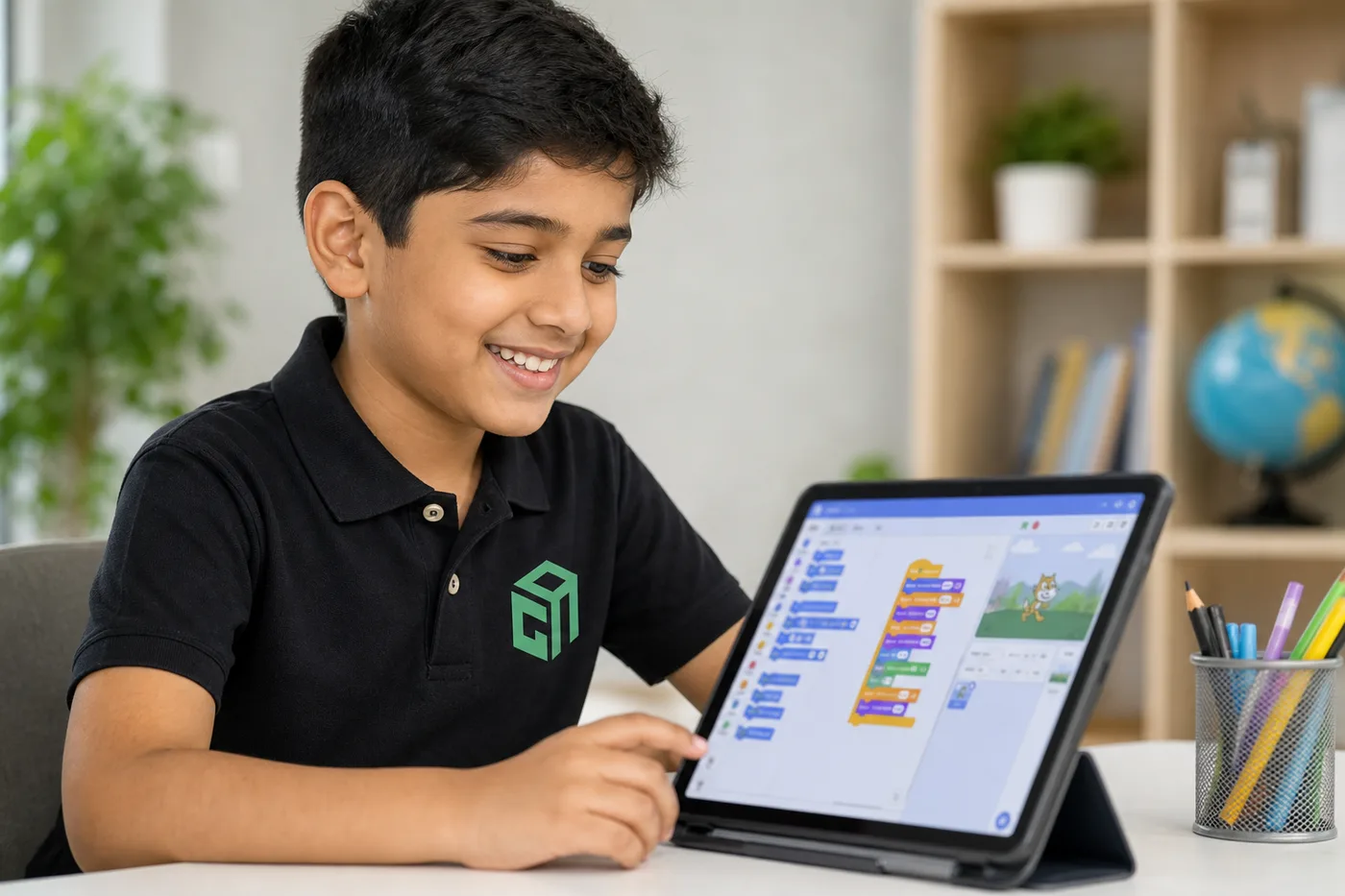
AI literacy for kids means understanding what artificial intelligence is, where it shows up in daily life, how to use it safely, and how to question its answers. Schools are teaching it because AI is no longer optional background tech — it is part of how students learn, create, and work.
What AI Literacy Includes
- Knowing AI is pattern-based, not all-knowing
- Writing clearer prompts for better results
- Protecting privacy and personal data
- Checking facts instead of copying blindly
- Creating projects: art, stories, games, simple agents
Why Schools Are Starting Now
Boards and schools are adding computational thinking and AI awareness because employers and colleges expect digital fluency. More importantly, children need judgment: when AI helps learning, and when it short-circuits thinking.
How Parents Can Support AI Literacy at Home
- Ask your child to explain an AI answer in their own words
- Practice “verify before you trust” on homework help
- Choose mentor-led classes over unsupervised chat tools
- Celebrate creative AI projects with clear safety rules
GeekashramJr teaches AI literacy through AI in Everyday Life for younger makers and Python with AI / Hands-on AI for older students. Start with a local-currency 60-minute session (adjusted on enrolment) to pick the right depth.